

Crystal Pendants: Where Engineering Meets Light
Featured Products | July 10, 2026 | The Lighting Exchange
The right fixture doesn't just illuminate a space — it defines how that space feels.
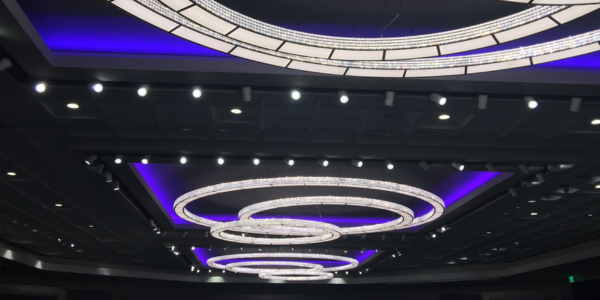
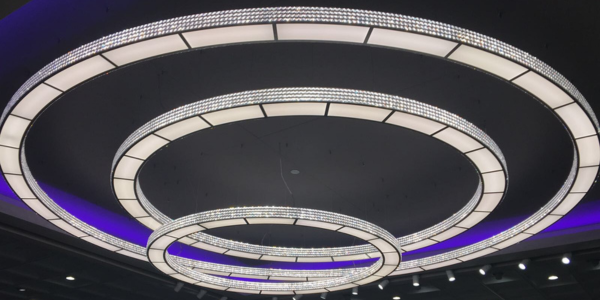
Walk into a hotel lobby, a boutique storefront, or a well-designed residential entry, and often the first thing that catches your eye isn't the furniture or the finishes. It's the light — specifically, how it moves. Crystal pendants have earned a permanent place in architectural lighting because they do something few other fixtures can: they turn a single light source into dozens of small, moving reflections.
Crystal as a Material
"Crystal" in lighting almost always refers to a dense, highly refined glass — not the mineral crystals found in nature. What sets it apart from ordinary glass is composition: adding lead oxide, or substitutes like barium or zinc in lead-free formulations, increases the material's density and refractive index. That higher refractive index is what bends light more sharply at each facet, producing the sparkle and depth crystal is known for. The more precisely a piece is cut and polished, the more those internal angles multiply a single bulb into dozens of points of light.
Why Crystal, Specifically
Glass diffuses light. Crystal refracts it. A fixture cut from true optical crystal feels alive rather than static, shifting subtly as people move beneath it or as ambient light changes throughout the day. For architects and designers, this isn't just decorative flourish — it's a tool for shaping perceived scale, warmth, and hierarchy in a room. A single pendant can anchor a double-height entry; a cluster can soften a hard-edged commercial space.
What Specifiers Should Weigh
Full-lead crystal offers the highest clarity and brilliance but costs more and weighs more, affecting mounting and structural specification. K9 crystal, a leaded-glass alternative, gets close to that clarity at a lower price and lighter weight — often the practical choice for large-scale installations. Natural quartz appeals where a project calls for organic, less uniform facets.
Maintenance is easy to overlook until year two. Crystal shows dust and fingerprints more visibly than matte finishes, so pendants within reach — lobbies, retail, dining — need a cleaning plan built into the spec, not an afterthought.
FAQ
Is crystal the same as glass? Crystal is a denser, refined glass containing lead or lead-free additives that boost its refractive quality beyond standard glass.
Does crystal yellow over time? High-quality optical crystal is chemically stable and won't discolor under normal indoor conditions.
Are crystal pendants hard to maintain? They show dust and fingerprints more visibly than matte fixtures, so regular cleaning is recommended in high-touch areas.
Can crystal pendants use LED bulbs? Yes — LEDs pair well with crystal, offering long life and low heat output.
Is K9 crystal lower quality? Not lower quality — different. It offers strong clarity at a lower cost and weight than full-lead crystal.
Other News Content by:
Cerchio Lighting
The Biophilic Case for Botanical Lighting: What Living Plants Actually Do to a Room
Codes & Compliance | September 25, 2026 | The Lighting ExchangeThe Globe Collection: Murano Glass, Shaped by Breath
Featured Products | August 18, 2026 | The Lighting Exchange